Posts

Beavers in Britain: some thoughts on the mid-2010s beaver craze

Image
Picture taken from the Wildlife Trust Myself and other environmental-leftist thinkers will have been cornered into a strange position in the previous few months; agreeing with a proposal that infamous tory politician Michael Gove has put backing behind. Indeed, as environmental secretary, he has been saying many of the ‘right things’ when it comes to environment, sustainability & their future in Britain. Gove has recently given his backing to the proposal for the reintroduction of  beavers to the Forest of Dean where they have been absent for four hundred years.             Elsewhere in the West country, the Devon Wildlife trust has been conducting a heavily monitored trial release of beavers in the River Otter since 2015. These are just a few of the voices clamouring for beaver reintroduction to the united kingdom, amidst calls for other reintroductions, many of them much less timid creatures as the beaver...
Rewilder’s Toolkit: some texts that got me thinking critically about a radical new future for human life and the planet.

Image
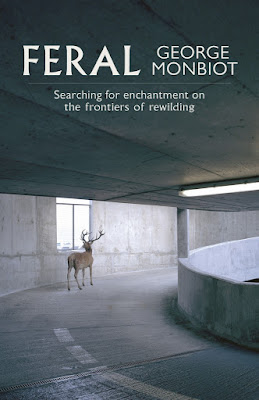
These are some texts that I read while studying Environment, Development & Policy at the university of Sussex that I feel helped formulate my own ideas on rewilding as a conservation strategy. There are definitely more out there that are explicitly about rewilding, but I feel these helped me form my own personal opinion. To follow up, the works of Franz Vera, Sergey Zimov, David Foreman, Josh Donlan et al. and Mauro Galetti have helped form some of the earlier writings on rewilding. Feral: Searching for Enchantment on the Frontiers of Rewilding - George Monbiot The first text on rewilding I read. I was turned on to Feral by a piece written by Monbiot in the Guardian, which I think was an adapted excerpt in the run-up to the books launch. Monbiot has written fairly extensively on environment and society, with a previous book, HEAT, focussing on climate change. This book offers an extensive and emotive look at rewilding in a holistic British landscape, selecting areas o...

Autumn Products

Image
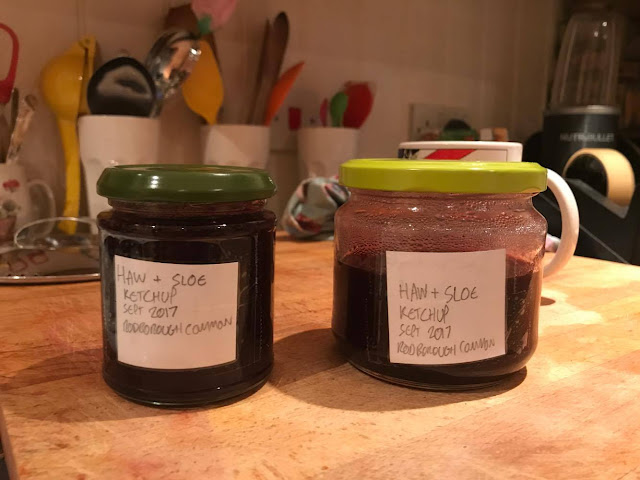
Although I have put together the odd jam or syrup every year for at least three years now, I still consider myself an amateur at best when it comes to making preserves. Nevertheless, I feel I have got the gist of making certain products and what defines them in ingredient and technique. These are products that I consider 'autumn' products. Savoury I have made chutneys and ketchups before, but not many times. This year I made a Hawthorn ketchup with some added Sloes (the fruit of the blackthorn plant) as part of a gift bundle of foraged preserves (mainly because I am stone broke!) The ketchup came out brilliantly, with a subtle berry sweetness perfect with cheeses. I prefer it with halloumi or a goats cheese, but have had it in sandwiches regardless. I did not use many sloes, and they are more commonly used to make gins. Hawthorn has many medicinal attributes, mainly to do with the health of the heart and circulation.   A jar and a half of Haw & Sloe Ketchup. I m...

First Garden: Growing Forays in a Student House

Image
While in my master’s year at the University of Sussex, I had the sudden benefit of a garden- we’d had one before, but then it was all concreted, paved patio, with a few fallow corners teeming with hardy bushes and weeds. I attempted creating a small bed for at least a flower of some sort but it was so shady that I was confined to growing inside (often unsuccessfully.)             The garden was similar to the previous one, but with a few meagre beds lining the walls. Though small and strewn with litter such as chicken bones and splintered fruit crates, and underlying plants such as a grape vine and daffodils that flourished suddenly in spring, this small space offered me an opportunity to grow things on my back doorstep, a chance I had not had yet.             In these small concreted beds I planted many vegetables and plants, with quite some small (but nonetheless warmin...

Language and Trees: Scottish Gaelic and Wilderness

Image
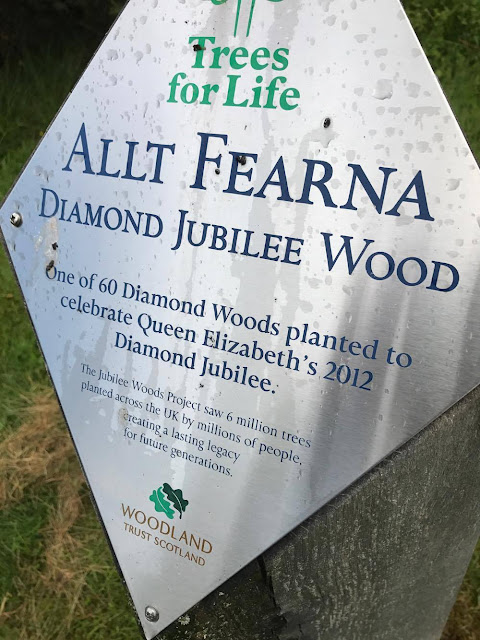
One of the things many conservationists, especially those involved in rewilding, in Scotland (or Britain in general) seem to turn to is the links between ancient British history and language and the wilderness that has since been drastically extirpated from the Isles. A consideration for the Celtic history of Britain can be found in texts such as George Monbiot's writings including his book Feral, which brought rewilding into British popular consciousness, and other texts that often highlight the plight of the Scottish or Welsh when faced with clearance and industrialised agricultural change. Organsiations similarly discuss the Celtic nature to Britain's wilderness, whether they are management trusts such as the Woodland trust, or rewilding organisations such as the Cambrian Wildwood project in Wales, or Trees for Life operating in Scotland. Many organisations have settled on exploring a particular era of linguistic history in the British Isles, namely the Brythonic (asides...

Four Years at Sussex Roots

Image
All pictures are taken from the Sussex Roots facebook group (link at bottom) and so may not be my own. Sussex Roots is a society at the University of Sussex; we have always attempted to act as a co-operative as much as Student Union society limits will let us. Basically, it is an allotment for all to get involved in, learn about DIY gardening for the purpose of food, learn about interacting with the environment, experiment with sustainability and socialise outside of an academic space. The original allotment site- we grew almost everything in raised beds outside. I first heard of Roots from a group of my neighbours from East Slope, the now condemned student halls at Sussex, that were about to head out to the site. It suddenly dawned on me that this would be the first time I could make decisions and be more active in growing food. Before, when working on family member's plots, I was merely clueless labour; now, I was part of a team, all of us clueless, welcoming to more c...