Posts

Showing posts with the label nonhumans

Opting out: on not eating meat

Image
It’s only been two years since I became a vegetarian, and for me it was very easy; although I ate meat, I never saw it as very important, and my upbringing didn’t hinge much cultural importance to it. As I began cooking more I began eating meat less, which was expensive and not always easily storable or usable, and fairly often bland. My partner has been a vegetarian most of her life so it made a lot of sense to just slip into it and stop eating meat in the winter of 2016.             The breaking point for me was a few lines and descriptions in J.M. Coetzee’s Elizabeth Costello, which I was studying at the time as part of my Literature undergraduate degree. Through the titular character, Coetzee elaborates that meat producing systems are factories of death, emerging from the Chicago slaughtering pits of the early 20 th century that specialised in toning the efficiency of killing, where men spent their working hours clubbing...

Beavers in Britain: some thoughts on the mid-2010s beaver craze

Image
Picture taken from the Wildlife Trust Myself and other environmental-leftist thinkers will have been cornered into a strange position in the previous few months; agreeing with a proposal that infamous tory politician Michael Gove has put backing behind. Indeed, as environmental secretary, he has been saying many of the ‘right things’ when it comes to environment, sustainability & their future in Britain. Gove has recently given his backing to the proposal for the reintroduction of  beavers to the Forest of Dean where they have been absent for four hundred years.             Elsewhere in the West country, the Devon Wildlife trust has been conducting a heavily monitored trial release of beavers in the River Otter since 2015. These are just a few of the voices clamouring for beaver reintroduction to the united kingdom, amidst calls for other reintroductions, many of them much less timid creatures as the beaver...

Rewilder’s Toolkit: some texts that got me thinking critically about a radical new future for human life and the planet.

Image
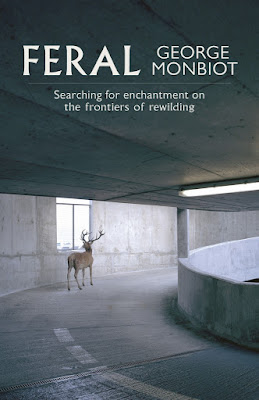
These are some texts that I read while studying Environment, Development & Policy at the university of Sussex that I feel helped formulate my own ideas on rewilding as a conservation strategy. There are definitely more out there that are explicitly about rewilding, but I feel these helped me form my own personal opinion. To follow up, the works of Franz Vera, Sergey Zimov, David Foreman, Josh Donlan et al. and Mauro Galetti have helped form some of the earlier writings on rewilding. Feral: Searching for Enchantment on the Frontiers of Rewilding - George Monbiot The first text on rewilding I read. I was turned on to Feral by a piece written by Monbiot in the Guardian, which I think was an adapted excerpt in the run-up to the books launch. Monbiot has written fairly extensively on environment and society, with a previous book, HEAT, focussing on climate change. This book offers an extensive and emotive look at rewilding in a holistic British landscape, selecting areas o...

Lives in our Death: Rewilding for a Post-Human World.

Image
Apocalyptic visions are getting harder and harder to ignore in the 21 st  century; they’re embedded densely in popular culture, the media frequently leans towards intense catastrophic fear-mongering, and many experts are espousing troubling theories about the nearing end-times, including the man who conceived of the ‘Gaia’ hypothesis, James Lovelock.             Instead of spurring a drive towards correction, this kind of embedded fear has all too often led to frantic action and bizarre offsetting of fear; Slavoj Žižek observes that in the face of impending sea level rises and the loss of both ice caps, people are instead attracted to (and fed by the media) stories about possible carbon-saving boat travel across the newly created Arctic sea, or the possiblility of Antarctica as an entirely new plain to colonise. This impedes the kind of radical environmental action massively; people are either happy to continue wit...

Talking with meat: Some Thoughts on Animals and Communication

Image
Originally posted on my other blog featuring a broader range of written work at  miragesofleavesinspring.blogspot.com   We cannot talk with animals. We cannot truly communicate; we can read body language and sounds, but we cannot converse, exchanging knowledge and stories. We believe we can, though.             Communication worldwide is poor. Humans do not know what other humans are really trying to say or what they really mean; between mind and mouth the message struggles to be released. With animals, it is obviously a whole lot worse, but humans have built up a series of communicative myths to enable them to live consciously at peace with the world of nature. This can be seen in the ‘wild’ animal, whom we respect for having a language and endlessly attempt to communicate with or ensnare in some way; the ‘domestic’ animal, whom we talk to, chatter with, but are talking really to ourselves; and the ‘incomm...

On National Animals

Image
Originally posted on my other blog featuring a broader range of written work at miragesofleavesinspring.blogspot.com (image via http://voices.nationalgeographic.com/files/2013/11/Julie-Larsen-Maher-5816-American-Bison-in-wild-YELL-05-05-06.jpg) Bison will wake up everyday from now on across the U.S., they will take the hard hits from sun, snow, wind, rain, they will duel with wolves and hunters, because finally, fine-al-lee, they’ve done that thing that they were born for, they were made for, their ancestors took knocks from tusks and spears and fangs for; they’re now the national mammal of the U.S. of A, my friends; they’re the proud hairy beasts of God’s own freedom country.             But they won’t. They’ll snuffle mounds of each other’s faeces, they’ll bray strangely at slight sounds among the woods. If they saw a flag, maybe they’d try and eat it, but more likely it’d be an annoyance, a brightly coloured occurren...