Posts

Showing posts with the label trees

European Rewilding for More than the Wealthy

Image
Longhorn Cattle Grazing at Knepp Estate, West Sussex, 2017 (Photo Author's Own)             Rewilding at its core is letting nature ‘get on with it.’ Much conservation & land management involves a huge amount of human meddling and intrusion and tends to maintain a ‘wilderness’ that is merely traditionally and aesthetically accepted. Nature has all of the necessary components in-built, but humans have altered these workings to the point that certain essential species have become extinct or extirpated (total removal of a species from an area) from countries that now have an impoverished wilderness. If we reintroduce some of these species we could spark a chain reaction that enriches wildlands. The most heavily cited success is the reintroduction of wolves to Yellowstone National Park in 1994. (Farquhar) The wolves keep deer numbers in check by hunting the slowest and weakest of the herd, and keep them on t...

Ecojam Bristol Article Portal

Image
I joined the Bristol section of ecojam as a voluntary writer in November 2017, and have since had a number of articles published on their website, and continue to write articles suitable for the site, which is primarily an environmental, ethical and local jobs/ carreers site. See below for the articles: How to Plant Trees in Bristol - this article looks at a number of ways Bristol residents can help get trees planted in the city 4 Reasons Volunteering in Bristol Helps Start Your Career - an article looking at ways that volunteering can help start and structure a career, based on a lot of what I learnt while volunteering myself. 5 Environmental Volunteering Opportunities in Bristol - a follow up to the previous, offering a guide on what organisations and tasks are on offer for different kinds of volunteering What Happens to Bristol's Sewage? - a researched look at the sewage process in Bristol, it's environmentally damaging faults and possible recycling and eco-friend...

Language and Trees: Scottish Gaelic and Wilderness

Image
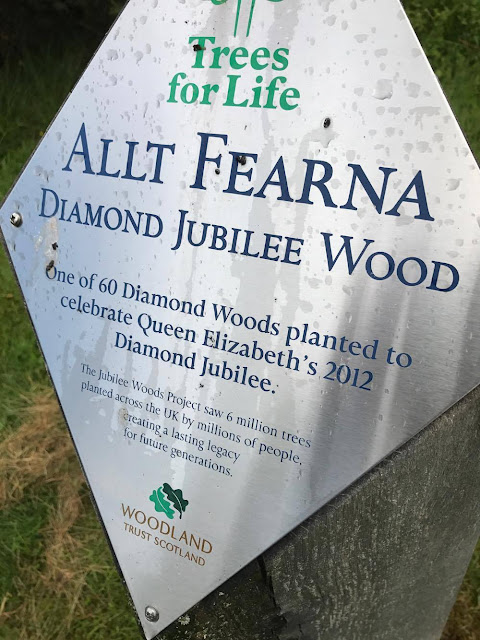
One of the things many conservationists, especially those involved in rewilding, in Scotland (or Britain in general) seem to turn to is the links between ancient British history and language and the wilderness that has since been drastically extirpated from the Isles. A consideration for the Celtic history of Britain can be found in texts such as George Monbiot's writings including his book Feral, which brought rewilding into British popular consciousness, and other texts that often highlight the plight of the Scottish or Welsh when faced with clearance and industrialised agricultural change. Organsiations similarly discuss the Celtic nature to Britain's wilderness, whether they are management trusts such as the Woodland trust, or rewilding organisations such as the Cambrian Wildwood project in Wales, or Trees for Life operating in Scotland. Many organisations have settled on exploring a particular era of linguistic history in the British Isles, namely the Brythonic (asides...

Four Years at Sussex Roots

Image
All pictures are taken from the Sussex Roots facebook group (link at bottom) and so may not be my own. Sussex Roots is a society at the University of Sussex; we have always attempted to act as a co-operative as much as Student Union society limits will let us. Basically, it is an allotment for all to get involved in, learn about DIY gardening for the purpose of food, learn about interacting with the environment, experiment with sustainability and socialise outside of an academic space. The original allotment site- we grew almost everything in raised beds outside. I first heard of Roots from a group of my neighbours from East Slope, the now condemned student halls at Sussex, that were about to head out to the site. It suddenly dawned on me that this would be the first time I could make decisions and be more active in growing food. Before, when working on family member's plots, I was merely clueless labour; now, I was part of a team, all of us clueless, welcoming to more c...

Reintroducing predators or emulating them; the missing ecological relationship in Britain.

Image
Originally posted on my other blog featuring a broader range of written work at  miragesofleavesinspring.blogspot.com   Near Horsham in West Sussex is a castle estate called ‘Knepp Estate,’ which, alongside farming, has let a great deal of the estate return to the wild. Medium-sized herbivores such as longhorn cattle, roe and fallow deer, Exmoor ponies and pigs roam freely on the estate. So far, these rewilding techniques have regenerated the soil’s nutrient quality, making farming once again viable near the site, whereas traditional intensive farming had rendered the soil unworkable without large quantities of chemical fertiliser; farming is finally profitable once again in the area.             The benefits of rewilding are numerous; vastly increased biodiversity and carbon sequestration, as well as social benefits such as those George Monbiot wrote about in  Feral;  the sense of adventure and wonde...