Posts

Showing posts with the label rewilding

European Rewilding for More than the Wealthy

Image
Longhorn Cattle Grazing at Knepp Estate, West Sussex, 2017 (Photo Author's Own)             Rewilding at its core is letting nature ‘get on with it.’ Much conservation & land management involves a huge amount of human meddling and intrusion and tends to maintain a ‘wilderness’ that is merely traditionally and aesthetically accepted. Nature has all of the necessary components in-built, but humans have altered these workings to the point that certain essential species have become extinct or extirpated (total removal of a species from an area) from countries that now have an impoverished wilderness. If we reintroduce some of these species we could spark a chain reaction that enriches wildlands. The most heavily cited success is the reintroduction of wolves to Yellowstone National Park in 1994. (Farquhar) The wolves keep deer numbers in check by hunting the slowest and weakest of the herd, and keep them on t...

Beavers in Britain: some thoughts on the mid-2010s beaver craze

Image
Picture taken from the Wildlife Trust Myself and other environmental-leftist thinkers will have been cornered into a strange position in the previous few months; agreeing with a proposal that infamous tory politician Michael Gove has put backing behind. Indeed, as environmental secretary, he has been saying many of the ‘right things’ when it comes to environment, sustainability & their future in Britain. Gove has recently given his backing to the proposal for the reintroduction of  beavers to the Forest of Dean where they have been absent for four hundred years.             Elsewhere in the West country, the Devon Wildlife trust has been conducting a heavily monitored trial release of beavers in the River Otter since 2015. These are just a few of the voices clamouring for beaver reintroduction to the united kingdom, amidst calls for other reintroductions, many of them much less timid creatures as the beaver...

Rewilder’s Toolkit: some texts that got me thinking critically about a radical new future for human life and the planet.

Image
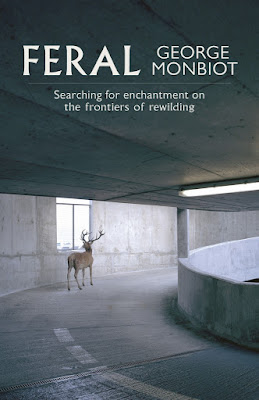
These are some texts that I read while studying Environment, Development & Policy at the university of Sussex that I feel helped formulate my own ideas on rewilding as a conservation strategy. There are definitely more out there that are explicitly about rewilding, but I feel these helped me form my own personal opinion. To follow up, the works of Franz Vera, Sergey Zimov, David Foreman, Josh Donlan et al. and Mauro Galetti have helped form some of the earlier writings on rewilding. Feral: Searching for Enchantment on the Frontiers of Rewilding - George Monbiot The first text on rewilding I read. I was turned on to Feral by a piece written by Monbiot in the Guardian, which I think was an adapted excerpt in the run-up to the books launch. Monbiot has written fairly extensively on environment and society, with a previous book, HEAT, focussing on climate change. This book offers an extensive and emotive look at rewilding in a holistic British landscape, selecting areas o...

Language and Trees: Scottish Gaelic and Wilderness

Image
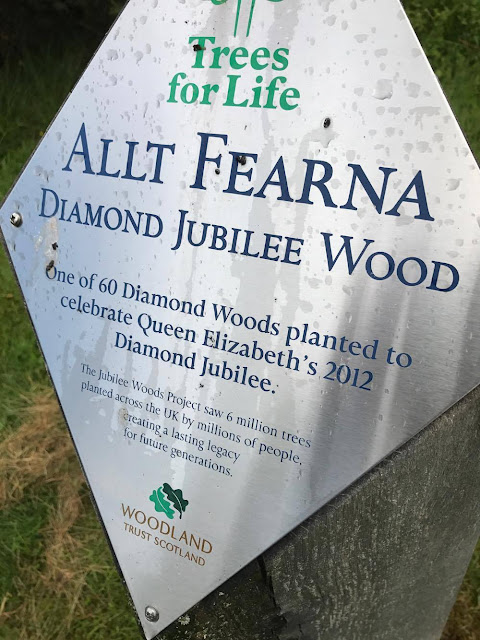
One of the things many conservationists, especially those involved in rewilding, in Scotland (or Britain in general) seem to turn to is the links between ancient British history and language and the wilderness that has since been drastically extirpated from the Isles. A consideration for the Celtic history of Britain can be found in texts such as George Monbiot's writings including his book Feral, which brought rewilding into British popular consciousness, and other texts that often highlight the plight of the Scottish or Welsh when faced with clearance and industrialised agricultural change. Organsiations similarly discuss the Celtic nature to Britain's wilderness, whether they are management trusts such as the Woodland trust, or rewilding organisations such as the Cambrian Wildwood project in Wales, or Trees for Life operating in Scotland. Many organisations have settled on exploring a particular era of linguistic history in the British Isles, namely the Brythonic (asides...

Lives in our Death: Rewilding for a Post-Human World.

Image
Apocalyptic visions are getting harder and harder to ignore in the 21 st  century; they’re embedded densely in popular culture, the media frequently leans towards intense catastrophic fear-mongering, and many experts are espousing troubling theories about the nearing end-times, including the man who conceived of the ‘Gaia’ hypothesis, James Lovelock.             Instead of spurring a drive towards correction, this kind of embedded fear has all too often led to frantic action and bizarre offsetting of fear; Slavoj Žižek observes that in the face of impending sea level rises and the loss of both ice caps, people are instead attracted to (and fed by the media) stories about possible carbon-saving boat travel across the newly created Arctic sea, or the possiblility of Antarctica as an entirely new plain to colonise. This impedes the kind of radical environmental action massively; people are either happy to continue wit...

Reintroducing predators or emulating them; the missing ecological relationship in Britain.

Image
Originally posted on my other blog featuring a broader range of written work at  miragesofleavesinspring.blogspot.com   Near Horsham in West Sussex is a castle estate called ‘Knepp Estate,’ which, alongside farming, has let a great deal of the estate return to the wild. Medium-sized herbivores such as longhorn cattle, roe and fallow deer, Exmoor ponies and pigs roam freely on the estate. So far, these rewilding techniques have regenerated the soil’s nutrient quality, making farming once again viable near the site, whereas traditional intensive farming had rendered the soil unworkable without large quantities of chemical fertiliser; farming is finally profitable once again in the area.             The benefits of rewilding are numerous; vastly increased biodiversity and carbon sequestration, as well as social benefits such as those George Monbiot wrote about in  Feral;  the sense of adventure and wonde...