Posts

5 Ways to Cut Down on Food Waste in the Home

Image
Disclaimer: Article written with Bristol residents in mind; doesn't mean these tips don't apply wherever you are though! Food waste accounts for 7 million tonnes   of all waste created in the UK annually . Unlike other forms of waste, food waste has the potential to be easily diverted from landfill,   avoiding continued overfilling of landfills, pollution of the environment, and emissions from the transportation, industry and uncontrolled decomposition of this waste, not to mention the wasted man hours, soil nutrients, water, and additional costs needed to create any and all food. Grow your own vegetables By growing your own vegetables you can be in control of everything that will go into them, and eventually your mouth. Asides from the taste and health benefits, you’ll be more wary of wasting the results of your hard work rather than easily accessible supermarket produce; you won’t have to purchase as much produce as well, and so will sa...

Ecojam Bristol Article Portal

Image
I joined the Bristol section of ecojam as a voluntary writer in November 2017, and have since had a number of articles published on their website, and continue to write articles suitable for the site, which is primarily an environmental, ethical and local jobs/ carreers site. See below for the articles: How to Plant Trees in Bristol - this article looks at a number of ways Bristol residents can help get trees planted in the city 4 Reasons Volunteering in Bristol Helps Start Your Career - an article looking at ways that volunteering can help start and structure a career, based on a lot of what I learnt while volunteering myself. 5 Environmental Volunteering Opportunities in Bristol - a follow up to the previous, offering a guide on what organisations and tasks are on offer for different kinds of volunteering What Happens to Bristol's Sewage? - a researched look at the sewage process in Bristol, it's environmentally damaging faults and possible recycling and eco-friend...

Living in the End Times is Strange

Image
Obviously we do not want to believe that the apocalypse is upon us, but our current era is ticking a lot of boxes. A massive extinction event is underway globally; natural landscapes including rainforest are increasingly torn apart to make way for crop monocultures and anthropocentric land management; the climate is shifting into human-induced instability. For humans there are impending crises of overpopulation, fertile land availability, and water purity. Yet, we are trundling on.             Yes, certain concerns get thrust into the public eye, like the endangerment of charming mammals or marine plastic pollution, but the whole, the entirety, should be much more concerning than it is treated. I feel this is partly because the kind of apocalypse that our literature, art, film and religion prepares us for is dramatic, sudden, definite, universal, and possibly glamorous.      ...

Opting out: on not eating meat

Image
It’s only been two years since I became a vegetarian, and for me it was very easy; although I ate meat, I never saw it as very important, and my upbringing didn’t hinge much cultural importance to it. As I began cooking more I began eating meat less, which was expensive and not always easily storable or usable, and fairly often bland. My partner has been a vegetarian most of her life so it made a lot of sense to just slip into it and stop eating meat in the winter of 2016.             The breaking point for me was a few lines and descriptions in J.M. Coetzee’s Elizabeth Costello, which I was studying at the time as part of my Literature undergraduate degree. Through the titular character, Coetzee elaborates that meat producing systems are factories of death, emerging from the Chicago slaughtering pits of the early 20 th century that specialised in toning the efficiency of killing, where men spent their working hours clubbing...

Beavers in Britain: some thoughts on the mid-2010s beaver craze

Image
Picture taken from the Wildlife Trust Myself and other environmental-leftist thinkers will have been cornered into a strange position in the previous few months; agreeing with a proposal that infamous tory politician Michael Gove has put backing behind. Indeed, as environmental secretary, he has been saying many of the ‘right things’ when it comes to environment, sustainability & their future in Britain. Gove has recently given his backing to the proposal for the reintroduction of  beavers to the Forest of Dean where they have been absent for four hundred years.             Elsewhere in the West country, the Devon Wildlife trust has been conducting a heavily monitored trial release of beavers in the River Otter since 2015. These are just a few of the voices clamouring for beaver reintroduction to the united kingdom, amidst calls for other reintroductions, many of them much less timid creatures as the beaver...

Rewilder’s Toolkit: some texts that got me thinking critically about a radical new future for human life and the planet.

Image
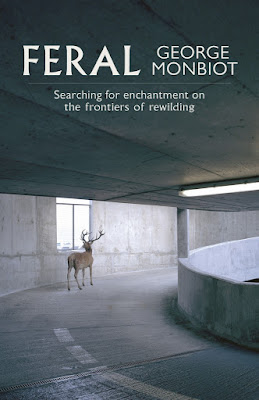
These are some texts that I read while studying Environment, Development & Policy at the university of Sussex that I feel helped formulate my own ideas on rewilding as a conservation strategy. There are definitely more out there that are explicitly about rewilding, but I feel these helped me form my own personal opinion. To follow up, the works of Franz Vera, Sergey Zimov, David Foreman, Josh Donlan et al. and Mauro Galetti have helped form some of the earlier writings on rewilding. Feral: Searching for Enchantment on the Frontiers of Rewilding - George Monbiot The first text on rewilding I read. I was turned on to Feral by a piece written by Monbiot in the Guardian, which I think was an adapted excerpt in the run-up to the books launch. Monbiot has written fairly extensively on environment and society, with a previous book, HEAT, focussing on climate change. This book offers an extensive and emotive look at rewilding in a holistic British landscape, selecting areas o...